
Publish your BYOB project now ->
Showcase growth: how to publish and promote projects from BYOB #
Shipping is not the finish line. Distribution is the second half of product work, and most builders treat it as an afterthought, publishing once into silence and wondering why nobody came.
Think of your project as a stall at a farmers market. Growing the vegetables was the first job. The second job is signage, samples, placement near foot traffic, and showing up every week so regulars learn your face. BYOB combines publish controls, live URL actions, custom domain management, and public listing visibility into one flow, so the market stall comes with the farm.
TLDR #
- Publish early to validate live behavior.
- Attach domain when trust and brand consistency matter.
- List publicly only after passing quality gate.
- Iterate from real feedback in short release loops.
How does the distribution pipeline work? #
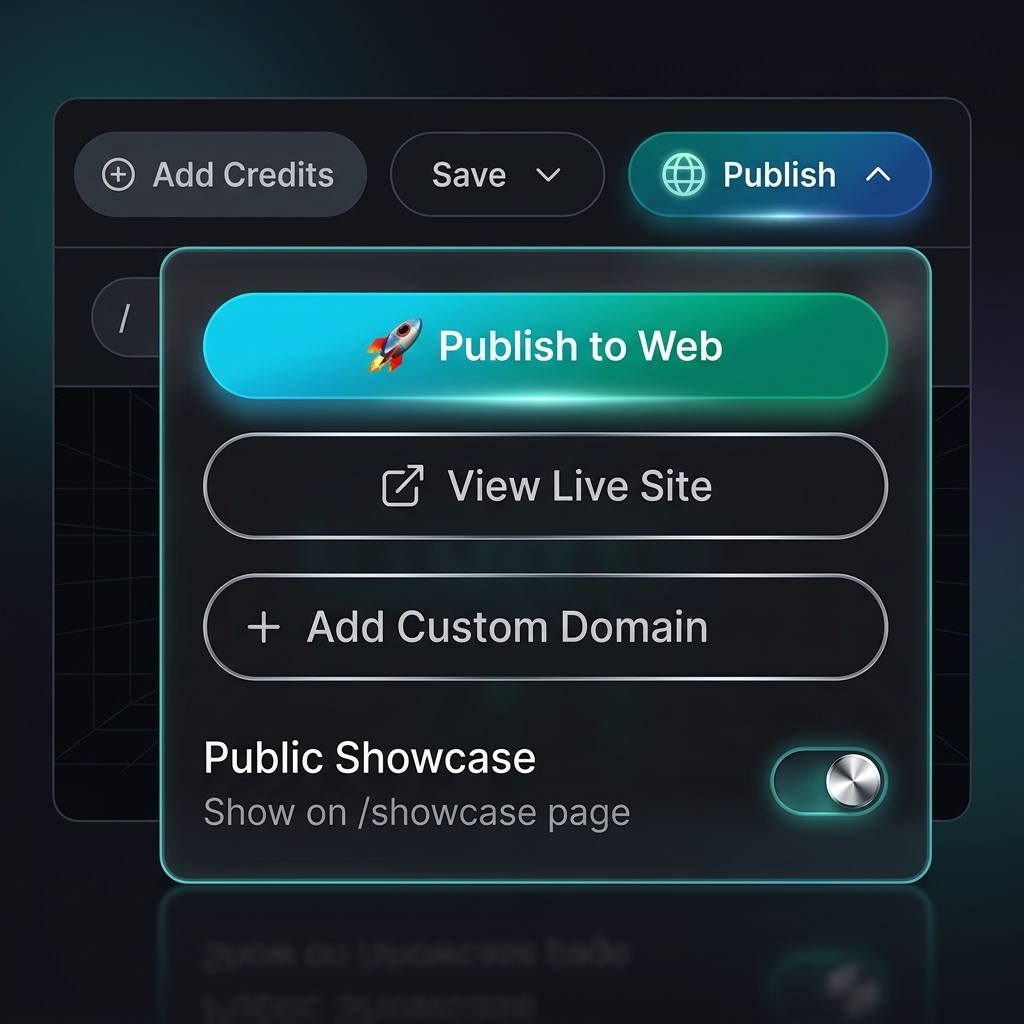
Each stage compounds the last. The live URL makes the work real and shareable. The domain makes it trustworthy. The public listing makes it discoverable. The sharing makes it visited. Skip straight to sharing a preview link and you pay for it in confused first impressions.
What should you check before you publish? #
Before sharing outside your team, validate basics.
| Check | Pass condition |
|---|---|
| Mobile layout | No overlap, no clipped CTA |
| Primary action | Clear and working |
| Performance | Acceptable first load |
| Metadata | Title and description set |
| Contact path | Form and links functional |
Skipping this step creates avoidable first-impression loss. Strangers grant about five seconds before judging, and a clipped call-to-action on their phone burns the visit permanently. Run the list on a real device. A resized desktop window will not catch the same failures.
What is the domain strategy for trust? #
Domain choice influences conversion more than most teams expect. The default BYOB URL excels for quick demos and works-in-progress, where speed matters and nobody judges the address bar. Custom domains earn trust for client sharing, investor links, and anything asking for money or email addresses. Consistent domain plus brand naming also improves memory and referral quality: people recommend addresses they can recall.
The mechanics stay cheap either way. Publishing pushes to Cloudflare's edge through the same Pages pipeline behind every BYOB deploy, and custom domains add automatic SSL once records propagate. Trust upgrades cost minutes, not migrations.
What is the public listing strategy? #
Public listing is a growth amplifier, not a default setting. Only list projects that represent your quality bar: complete key user path, stable copy and visual hierarchy, and a clear value proposition visible in the first screen without scrolling.
Public listing should follow quality gate, not excitement gate.
Excitement peaks at 1 AM after the deploy succeeds. Quality gates do not care about your adrenaline. Sleep, review with fresh eyes, then toggle visibility. The listing feed remembers what you publish longer than you remember publishing it.
How does the promotion loop work after publishing? #
- Share live link with one-line value statement.
- Capture first feedback from targeted audience.
- Ship focused fixes.
- Re-publish and document change summary.
- Repeat weekly.
This loop outperforms one giant redesign after long silence. Weekly iterations keep the project visibly alive, give audiences reasons to return, and convert feedback into momentum. Each cycle also refreshes your sitemap footprint: the sitemap protocol exists so crawlers discover updated URLs efficiently, and frequently improved pages with accurate last-modified signals get recrawled faster than abandoned ones.
Deploy your website to the world in seconds
Make every shared link work hard #
A link dropped into a feed competes with everything. The Open Graph protocol decides whether your link unfurls as a rich card with title, image, and description, or as a gray box nobody taps. Set all four required tags, title, type, image, and canonical URL, plus a written-to-earn-the-click description. Validate with a card preview tool before the big share, because fixing the image after two thousand impressions helps no one.
Structured data adds the second layer. Schema.org vocabulary lets search engines parse your pages as entities, articles, products, events, rather than text soup, which powers rich results in search long after the social spike fades. Social cards win the week. Structured data wins the year. Set both before promoting.
Try it: OG preview checker
What is in the channel playbook? #
| Channel | Best use |
|---|---|
| Direct messages | Early design partner feedback |
| Professional case-study framing | |
| X/Twitter | Rapid iteration and visibility bursts |
| Product communities | Honest feedback from builders |
Match channel style to audience expectation. LinkedIn wants the business outcome with numbers. X rewards the build-in-public thread with screenshots. Communities reward humility and punish pitches, so arrive with questions, not announcements. Direct messages beat all of them for the first ten users, because personal asks earn real replies while broadcasts earn impressions.
Which metrics should you track after launch? #
- click-through on shared link
- retention after first page
- contact form completion rate
- feedback-to-fix turnaround time
Distribution quality is measurable, so treat it like engineering quality. A link with high clicks and instant bounces diagnoses a promise problem: the card sold something the page never delivered. Strong retention with zero contact completions diagnoses a friction problem. Numbers name the disease, and named diseases get cured.
What is on the launch-day checklist? #
Use this checklist when sharing publicly for the first time.
- final copy and heading pass complete.
- screenshots and social preview cards validated.
- custom domain status confirmed if enabled.
- core conversion event tracking verified.
- rollback snapshot available.
Item five is the one everyone skips. Launch traffic finds the bug your checklist missed, and a known-good snapshot turns disaster into a sixty-second rollback story. BYOB's own platform confirms the mechanism in its FAQ on byob.studio: deployments record against saved commits, and rollback means redeploying a known hash.
What are the common mistakes? #
Mistake 1: publish once and disappear #
No iteration means no compounding growth. Audiences return to stalls that change weekly, not monuments unveiled once.
Mistake 2: list low-quality drafts publicly #
Poor first impressions reduce future trust. Drafts belong behind unlisted URLs with invited reviewers, not in the public feed.
Mistake 3: ignore metadata and share cards #
Even strong pages underperform when preview cards are weak. The card is the product until the click happens.
What are the trade-offs? #
Publish early plus gate public listing wins when distribution is the goal. A live URL validates behavior, a custom domain adds trust where it matters, Open Graph tags from ogp.me make shared links unfurl as cards, and the sitemap from sitemaps.org keeps discovery fresh.
| Pick early publish when | Keep the project unlisted when |
|---|---|
| The page passes the quality gate and supports the narrative | Copy, images, or links are still placeholders |
| Feedback can ship in short weekly loops | A launch audience will judge the brand on this link |
| Each channel gets its own angle and metric | No owner reads the metrics after launch |
Early listing loses when quality lags. Visibility is reversible, but a weak first impression travels. Pick the alternative when trust is on the line: validate live, attach the domain, pass the gate, then list.
What we learned building this #
Published projects render in the public showcase gallery, each with its own live URL plus preview art. That is what makes sharing work: every link you post opens the real thing. Publish first, then promote, since a dead link burns more trust than a late launch.
Who this is for (and who should skip it) #
This guide helps builders with a finished project who want launch day traffic instead of silence. If your site is live and you are ready to post, share, and measure, the loop above turns one launch into many visits.
Skip promotion if the project is still a draft with placeholder text. Finish the pages, fix the preview art, then come back and run the launch checklist.
- Best for startups launching a finished site and seeking first visits.
- Best for small business owners turning one launch into repeat traffic.
- Best for freelancers promoting client work with clean share links.
FAQ #
Should every project be listed publicly? #
No. List only projects that meet quality bar and support your narrative. A tight feed of three strong projects beats a sprawling gallery of twelve maybes.
Can I disable listing later? #
Yes. Visibility is reversible. Delist, improve, relist when ready.
Do I need custom domain before listing? #
No, but custom domain often improves trust in outbound contexts. Cold audiences judge addresses. Warm audiences do not care.
How often should I republish? #
Whenever you have meaningful fixes or clarity improvements, usually in short cycles. Weekly rhythm beats quarterly relaunches.
Publish, list, and promote your next project ->
Publish today, check the card preview tonight, share tomorrow morning. Distribution rewards the stall that opens early and often.